


More than a Degree: LSU Graduate’s Journey to Becoming an Outstanding Future Physician
May 06, 2026
Once he walks across the graduation stage and receives a degree in biological sciences, LSU student Mihir Babbar’s next stop is medical school. After four years studying biological sciences and psychology, Babbar is ready for the upcoming opportunities of his career, with not only a degree but experiences that have prepared him to be an outstanding future physician.
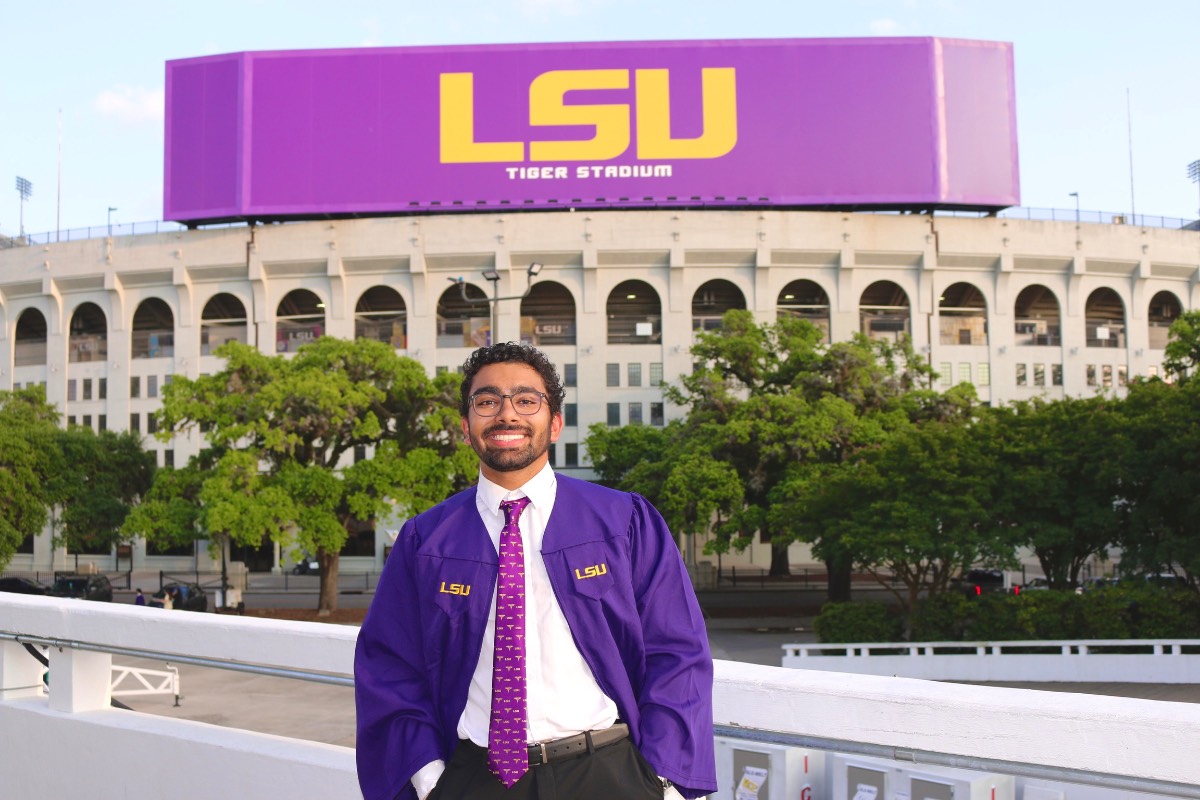
Mihir Babbar will graduate from LSU in May with a degree in biological sciences.
From Mandeville, La., Babbar said LSU’s football culture initially drew him to the
university, but the more he learned, "the more I realized LSU could give me everything I actually needed," starting with the research opportunities.
“The pre-medicine track was well-resourced, working with FMOL Health | Our Lady of the Lake, Baton Rouge Orthopedic Clinic, and other amazing local clinics. And the culture
of service woven through the university matched something I already felt called to:
showing up for people, for community, for Louisiana,” Babbar said. “I chose biological
sciences because I wanted the deepest possible foundation before medical school, and
I added a psychology minor because I've always believed treating a person means understanding
more than just their body. LSU was the place where all of that fit together: the science,
the service, and honestly, the soul of a university that takes pride in who it is.”
While Babbar expected competition in a challenging, demanding major, he instead found a community that led him to grow beyond academics.
“Early in my first year, I walked into a professor's office hours not really knowing what I was doing or where I was headed, and they just… talked with me. Not at me, not about a grade, they talked with me about medicine, about purpose, about what it really means to help people. That conversation stuck. I realized this was a place where people were paying attention, and that made all the difference,” Babbar said.
Babbar said LSU offered multiple transformative experiences and resources, whether through classes, projects, or clubs. One class that shifted Babbar’s perspective on his major was a Roger Hadfield Ogden Honors College class on homelessness, where he combined his classroom knowledge with his volunteer work through Sound the Alarm, installing free smoke alarms with the Red Cross Club he founded four years ago.
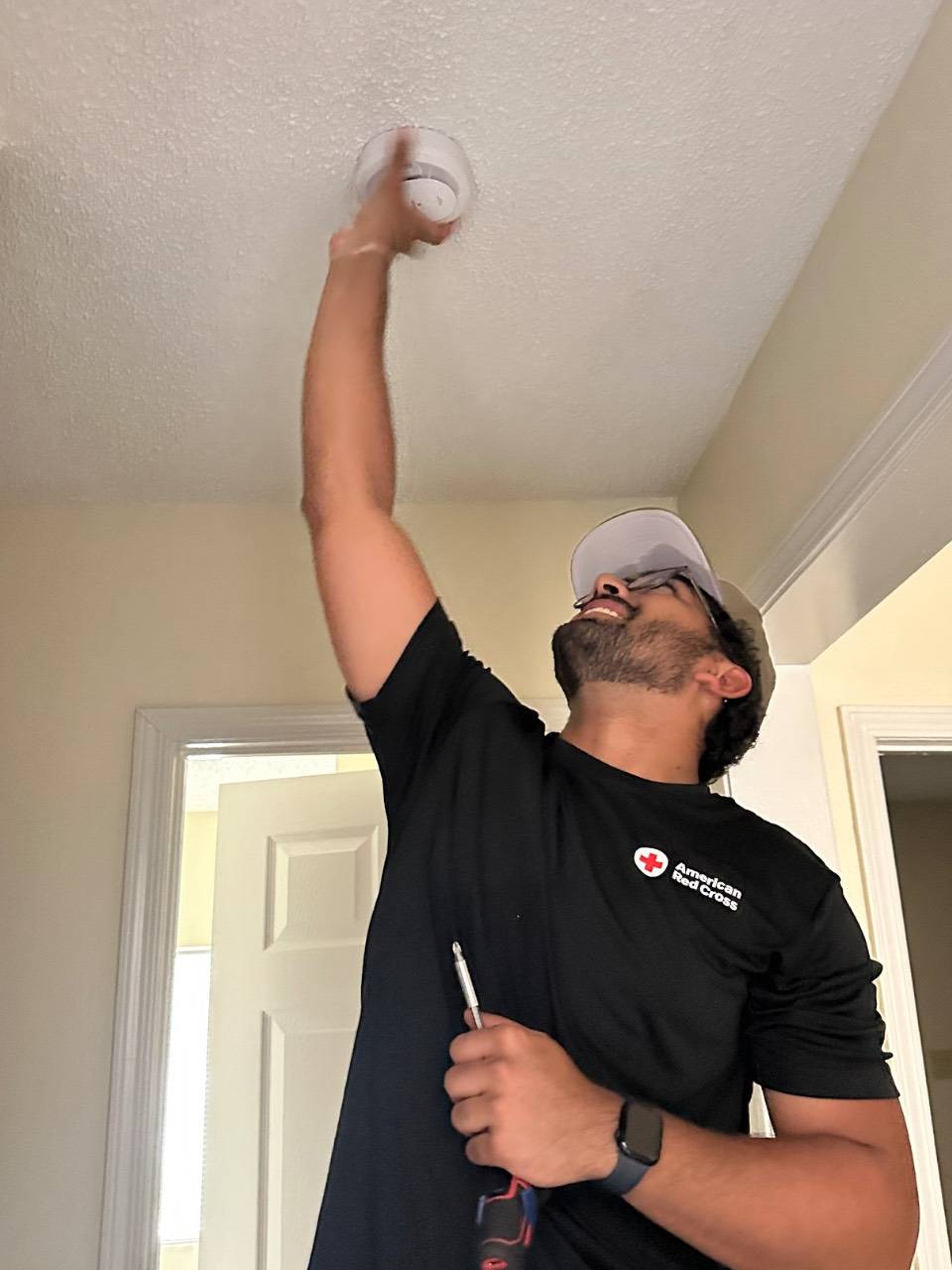
Babbar installs a fire alarm inside a Baton Rouge home.
“Suddenly the concepts weren't abstract anymore; they had faces and stories attached to them. That combination of academic understanding and real community experience gave me a new perspective on what it means to be a physician. It's not just about treating illness; it's about understanding the lives people are living outside the clinic,” said Babbar.
Along with volunteering, Babbar had the opportunity to work in Paul Frick's Psychology Lab, gaining hands-on knowledge of what he was learning in the classroom.
“It bridged two worlds I cared about and showed me how much overlap there is between understanding the mind and understanding medicine. That connection between psychological and physical health is something I know will follow me into my career as a physician.”
He said his involvement as the founder and president of the Red Cross Club as well as the president of an honor society, Alpha Epsilon Delta reshaped how he views leadership.
“My involvement in The Red Cross Club and AED reshaped how I think about leadership entirely,” Babbar said. “It grounded my motivation to pursue medicine in a way that classroom learning alone never could have.”
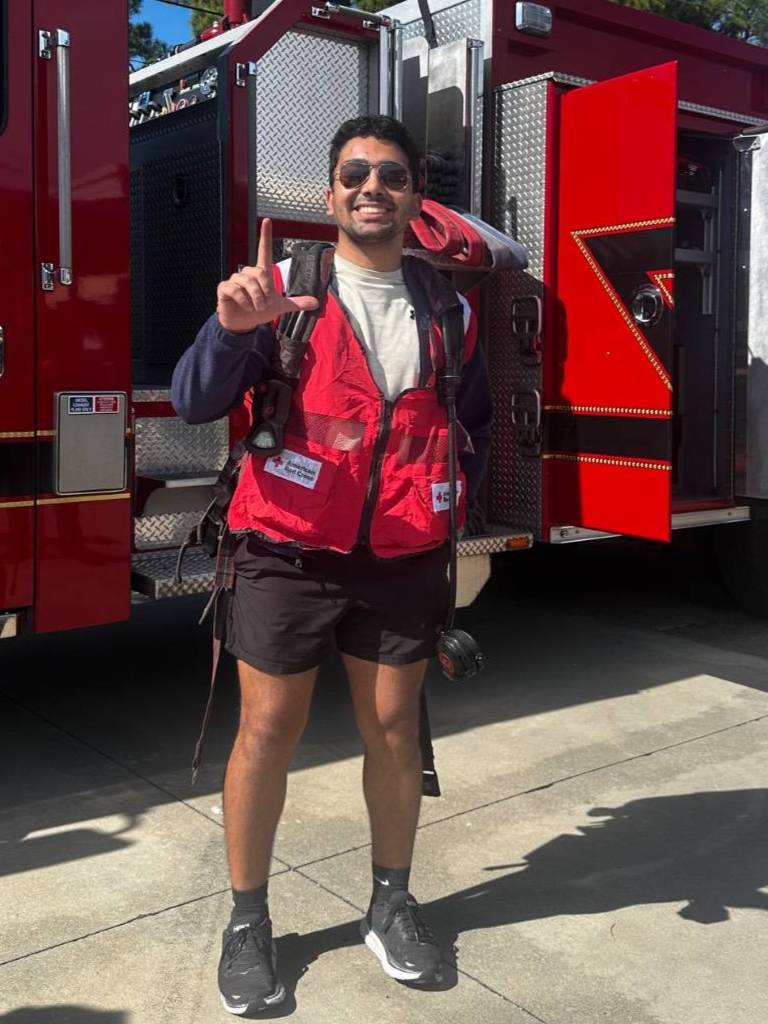
Mihir volunteering with the LSU club he founded, the Red Cross Club.
Through these experiences, he feels prepared to thrive on the next step of his journey, attending LSU School of Medicine in New Orleans, where he plans to practice medicine in places that need it most.
“I hope to practice medicine that reaches people who would otherwise fall through the cracks, whether that's through homeless clinics, pro bono care, or programs like Doctors Without Borders that take medicine to the places it's needed most. I didn't choose this field to practice from a distance. I want to be present, in my community, for the people who need it most. Louisiana gave me so much; becoming a physician is my way of giving some of that back,” Babbar said.
Babbar knows his LSU degree isn’t just a piece of paper but something he’ll carry with him forever.
“This university gave me so much more than I came looking for, and that's not something I'll ever take for granted,” Babbar said. “Being an LSU graduate means being forever grateful for a place that believed in me while I was still figuring out how to believe in myself.”