


LSU Research Bites: How Restored Marshes Can Truly Support Louisiana’s Most Elusive Birds
January 30, 2026
Imagine trudging through a marsh before dawn, water up to your waist, watching out for gators, stopping to play recordings of bird calls, and waiting, bated breath, to hear responses from some of the most reclusive birds in these habitats.
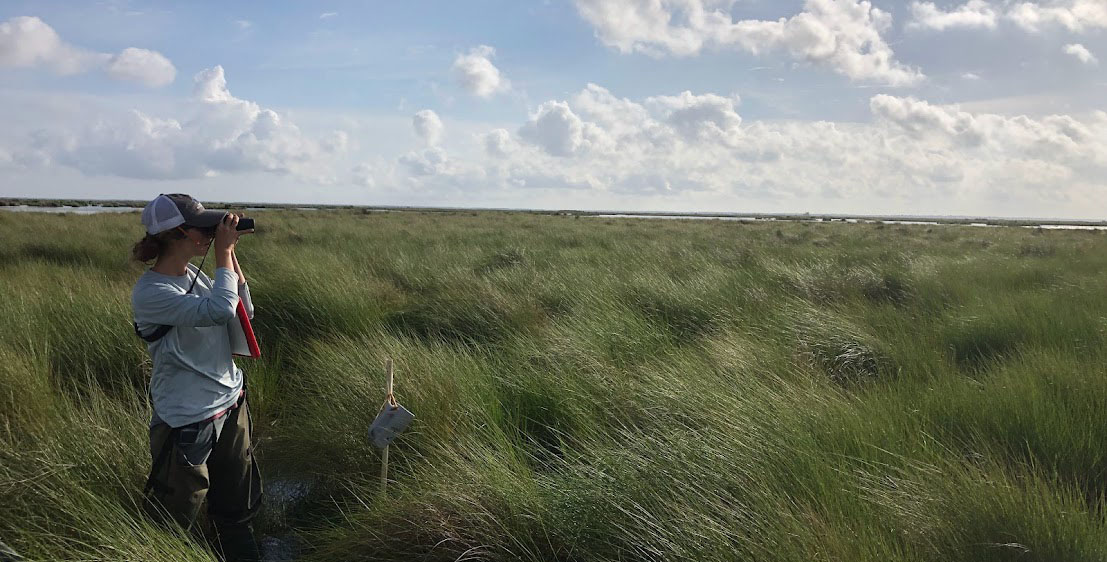
This is how researchers at the LSU School of Renewable Natural Resources have tracked and studied the habitat needs of unique marsh birds.
In a recent research study published in Restoration Ecology, LSU AgCenter researchers compared reference and created marshes in Louisiana, examining their vegetation, hydrologic characteristics such as water depth… and their bird residents.
The researchers visited 300 field sites four times a year for three years.


They conducted hundreds of bird surveys, used drone imagery to identify plants at each site, and used water-level recording devices to assess hydrologic characteristics. The team wanted to see whether created marshes can support secretive marsh birds, a group of quiet, reclusive, marsh-obligate species.
What are the secrets to creating the unique habitats needed by these shy birds?
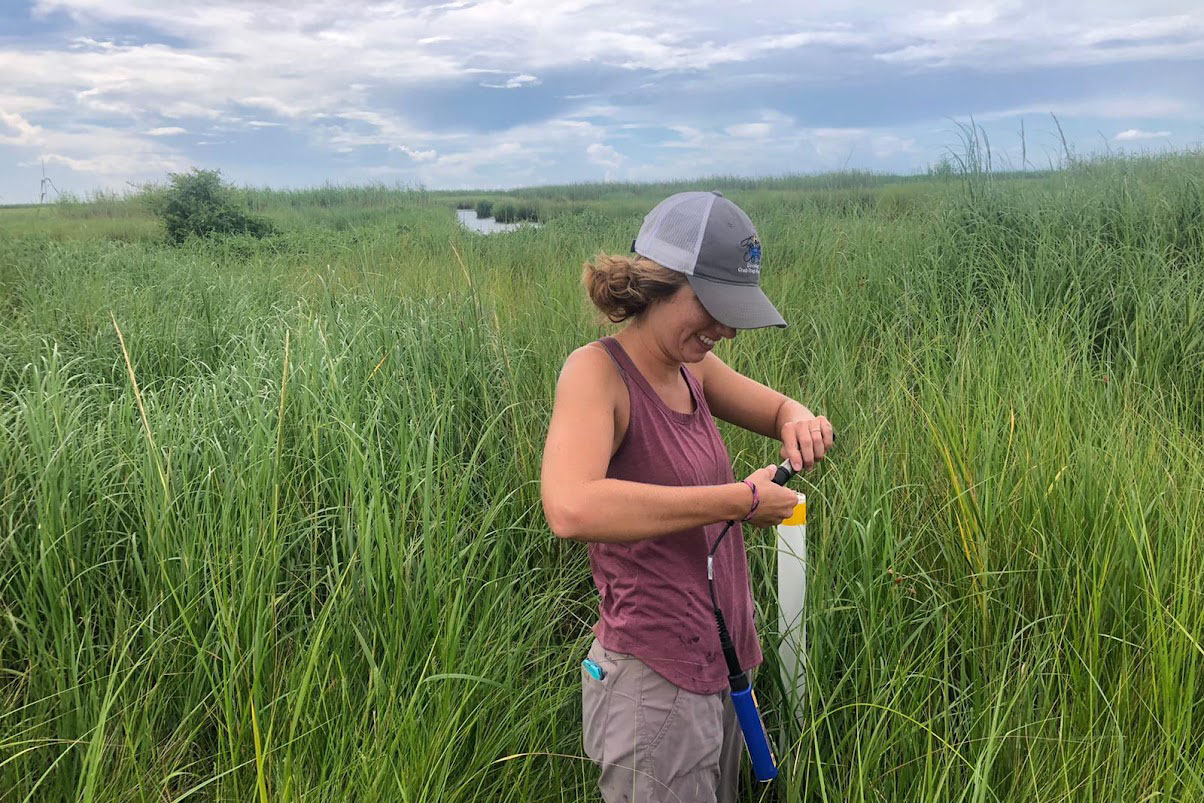
Aylett Lipford, lead author of the study and LSU alum, sets up a water logger, used to study hydrology at marsh sites.
“As their name implies, secretive marsh birds are a group of birds that are very elusive and secretive in nature, making them difficult to study,” said Aylett Lipford, lead author of the study and an alum of the LSU School of Renewable Natural Resources. “Little was known about their habitat requirements in Louisiana.”
Secretive marsh birds include the king rail, clapper rail, least bittern, common gallinule, and the vibrant purple gallinule. These birds can survive only in specific marsh systems, so their numbers are declining as coastal marsh habitat disappears.
“It’s crucial to ensure that newly created marshes in Louisiana are providing habitat for these marsh birds,” Lipford said. “We investigated what specific habitat features promote the highest abundances of secretive marsh birds, to inform future restoration efforts on Louisiana's coast.
Lipford and labmate Leah Moran, advisors Sammy King and Andy Nyman, and the Louisiana Department of Wildlife and Fisheries, found that created marshes can support marsh birds just as reference marshes can. But there’s a catch: Restored marshes must have the right habitat features, with water depth and vegetation being paramount. Not all restored marshes are created equal.
“Hydrologic variability and vegetation communities were the biggest drivers of marsh bird abundance,” Lipford said. “Sites that provide variable water levels with a shallow water level on average, or areas with both deep and shallow water, support a greater abundance of marsh specialist birds.”
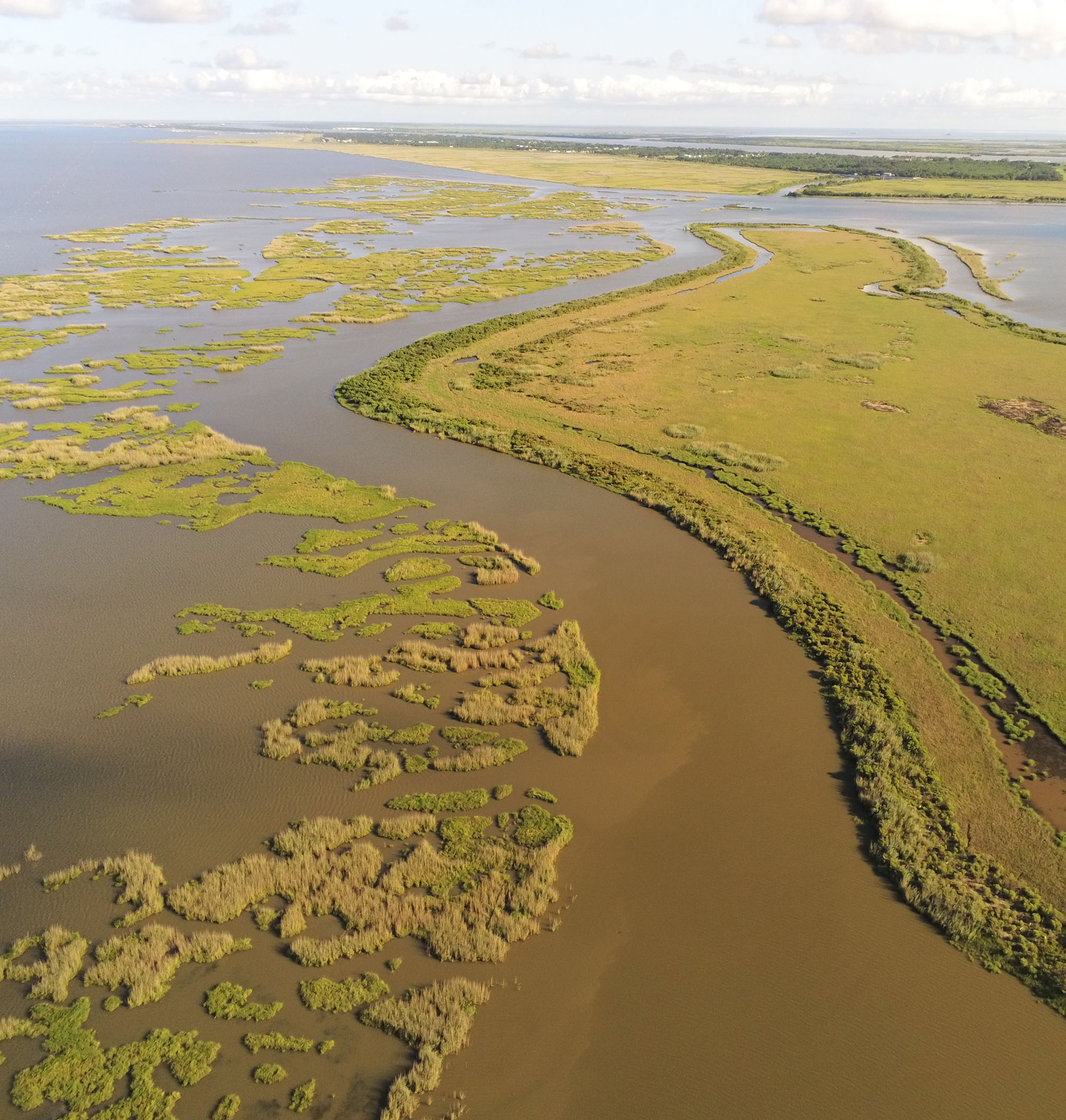
Marshes that were frequently flooded, with shallow water ponds and tidal creeks, were best for secretive marsh birds. Variable water levels are key. For example, created marshes with a finger design, where strips of land are built with water in between, could promote marsh bird habitat in future restoration projects.
“The Louisiana coast is an immensely valuable natural resource. I am honored that my work can help protect it.”
— Aylett Lipford
Vegetation also matters, with marsh birds more abundant in areas with the native weed grass called Roseau Cane.
This research is now being used by managers to build coastal wetlands that provide habitat for wildlife across Louisiana. But collecting the insights needed to ultimately inform restoration work took a village.
“We worked with many private landowners and members of the local communities of southeastern Louisiana who allowed us to survey on their property, gave us housing, helped us repair boat trailers, and told us their stories of how the coastal marsh has changed in their lifetime,” Lipford said.
Next Step
Discover stories showcasing LSU’s academic excellence, innovation, culture, and impact across Louisiana.